Cusco · Historic centre
Qorikancha
Inca stonework within a city of layered histories
At Qorikancha, the Inca past is part of the living city. Surviving temple masonry and the later Santo Domingo complex occupy the same place, making the relationship between two architectural traditions unusually visible.
Explore 5 photographs ↓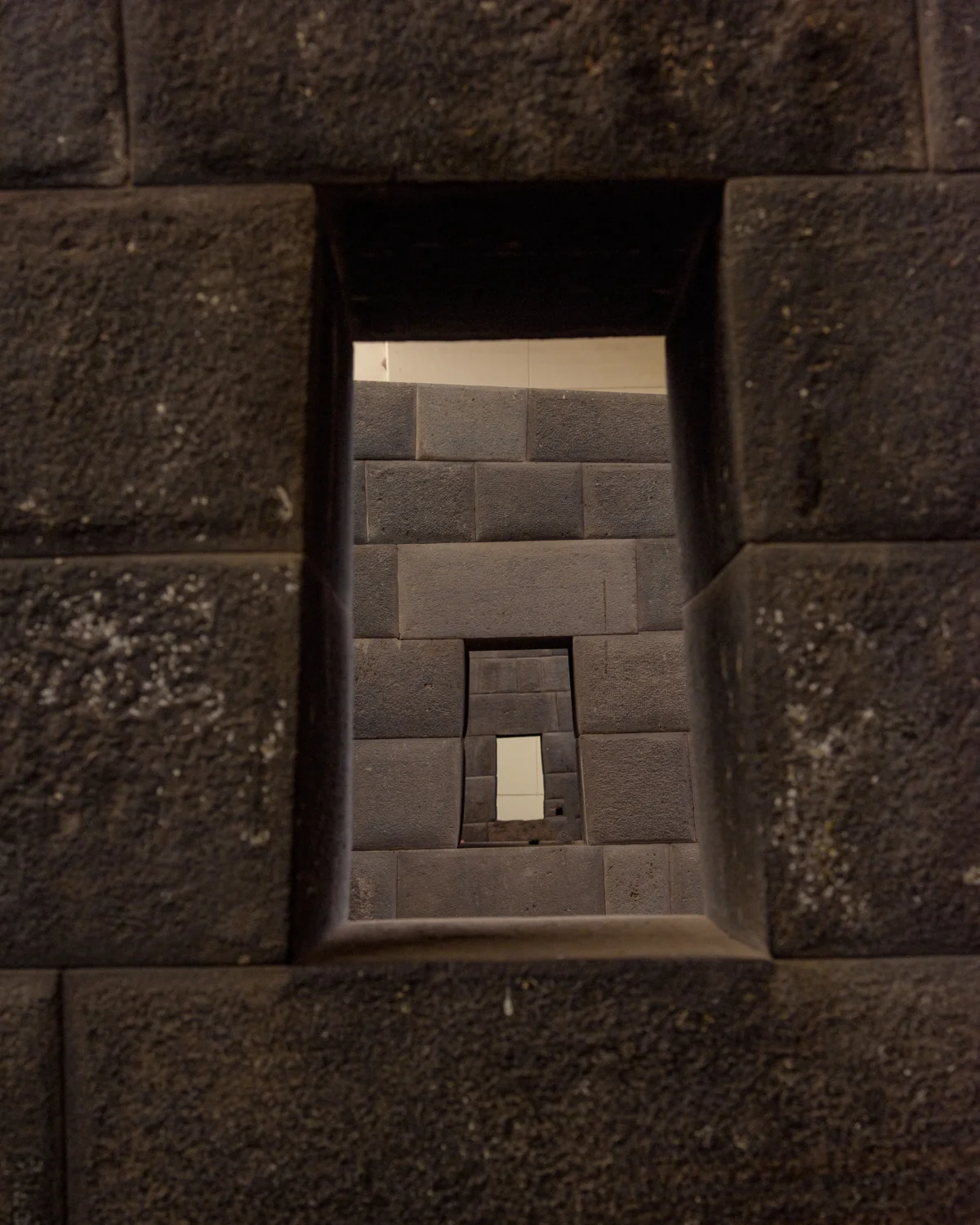
The enclosure of gold
Cusco’s municipal heritage account describes Qorikancha as a major sanctuary devoted to the Sun and other divinities. It explains the name as an enclosure of gold, recalling the gold sheets recorded on its walls. The surviving stone should therefore be imagined as part of a richly furnished sacred precinct, not as an interior that was always as bare as it appears today. [1]
A temple and a colonial convent
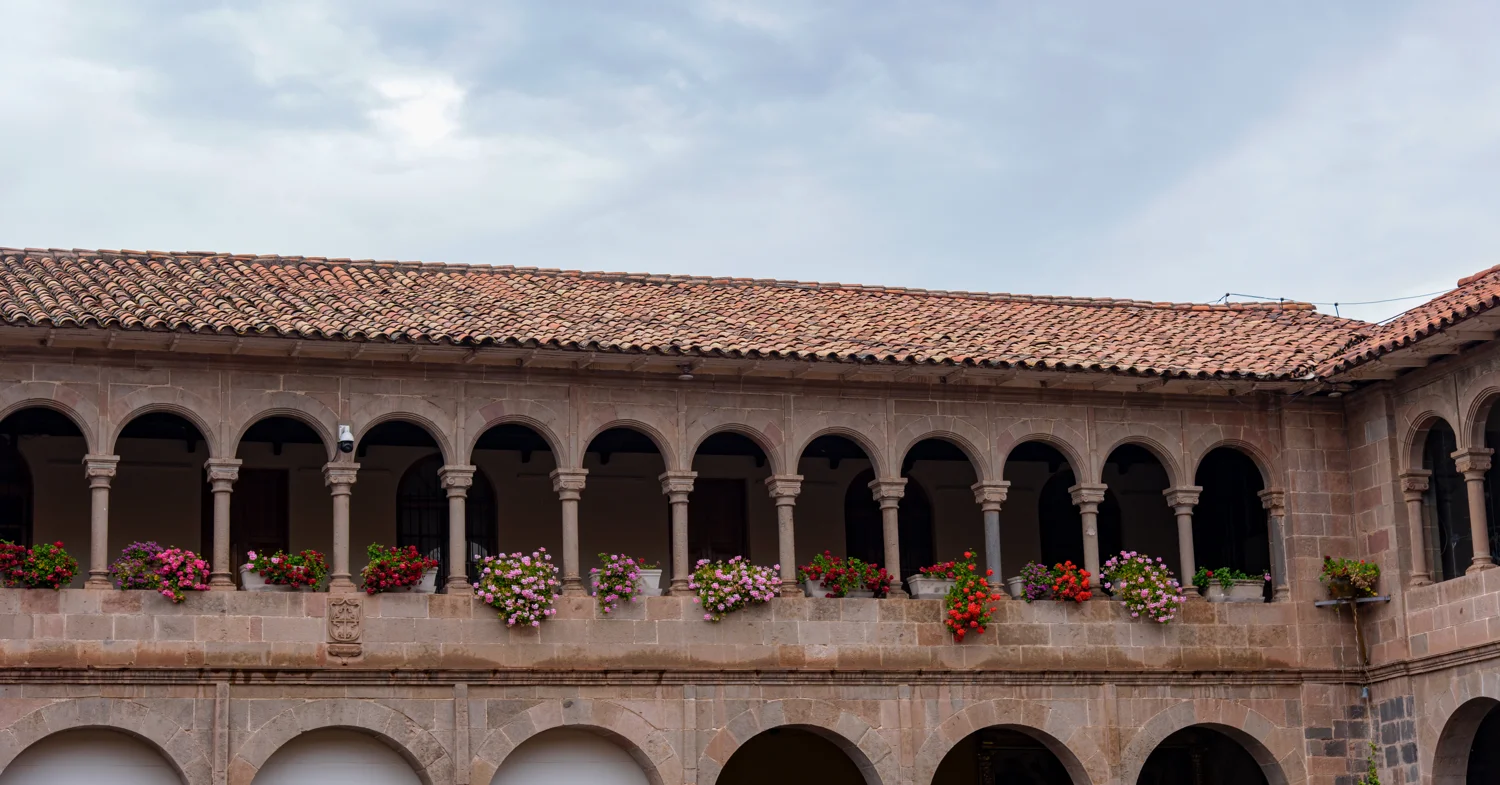
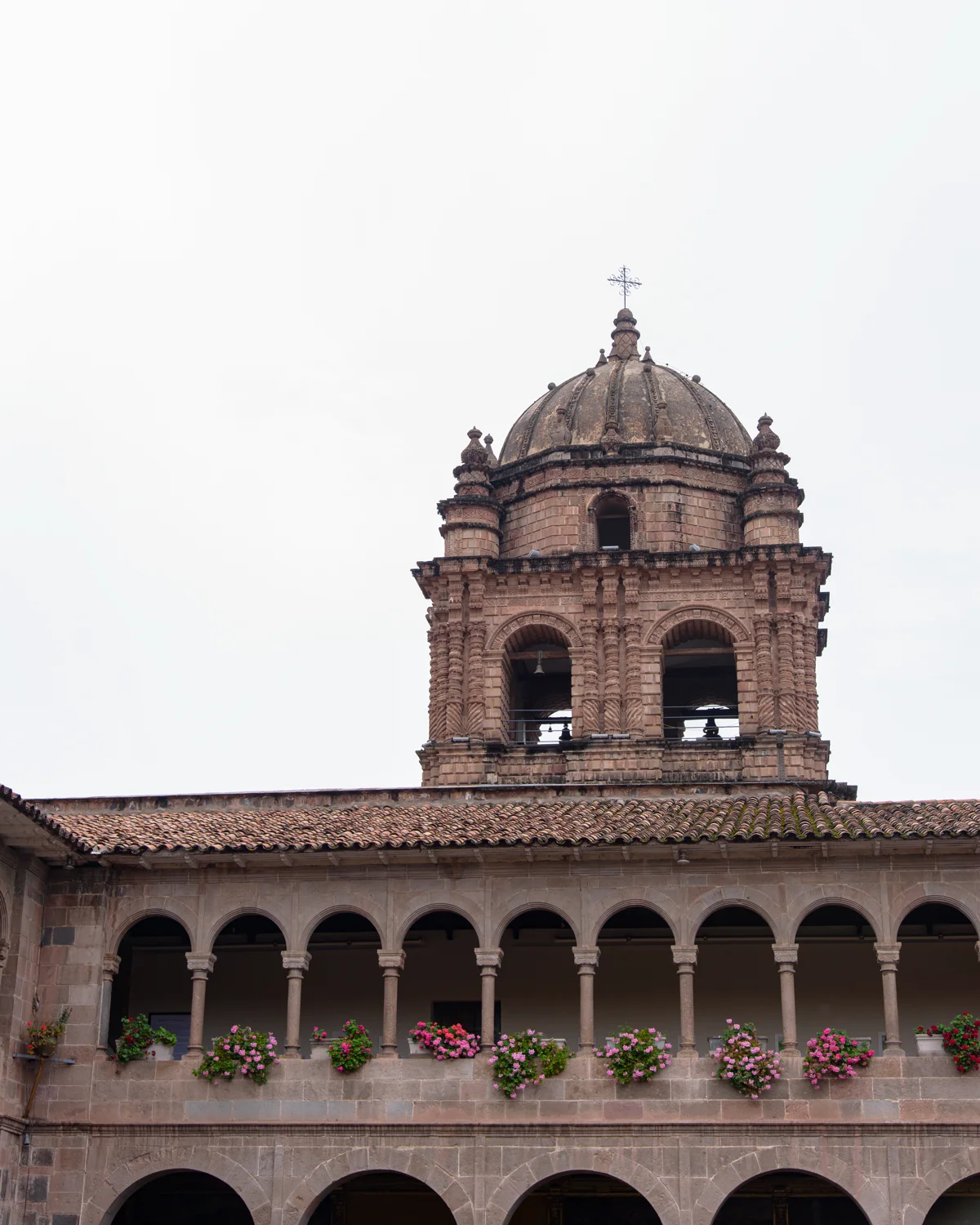
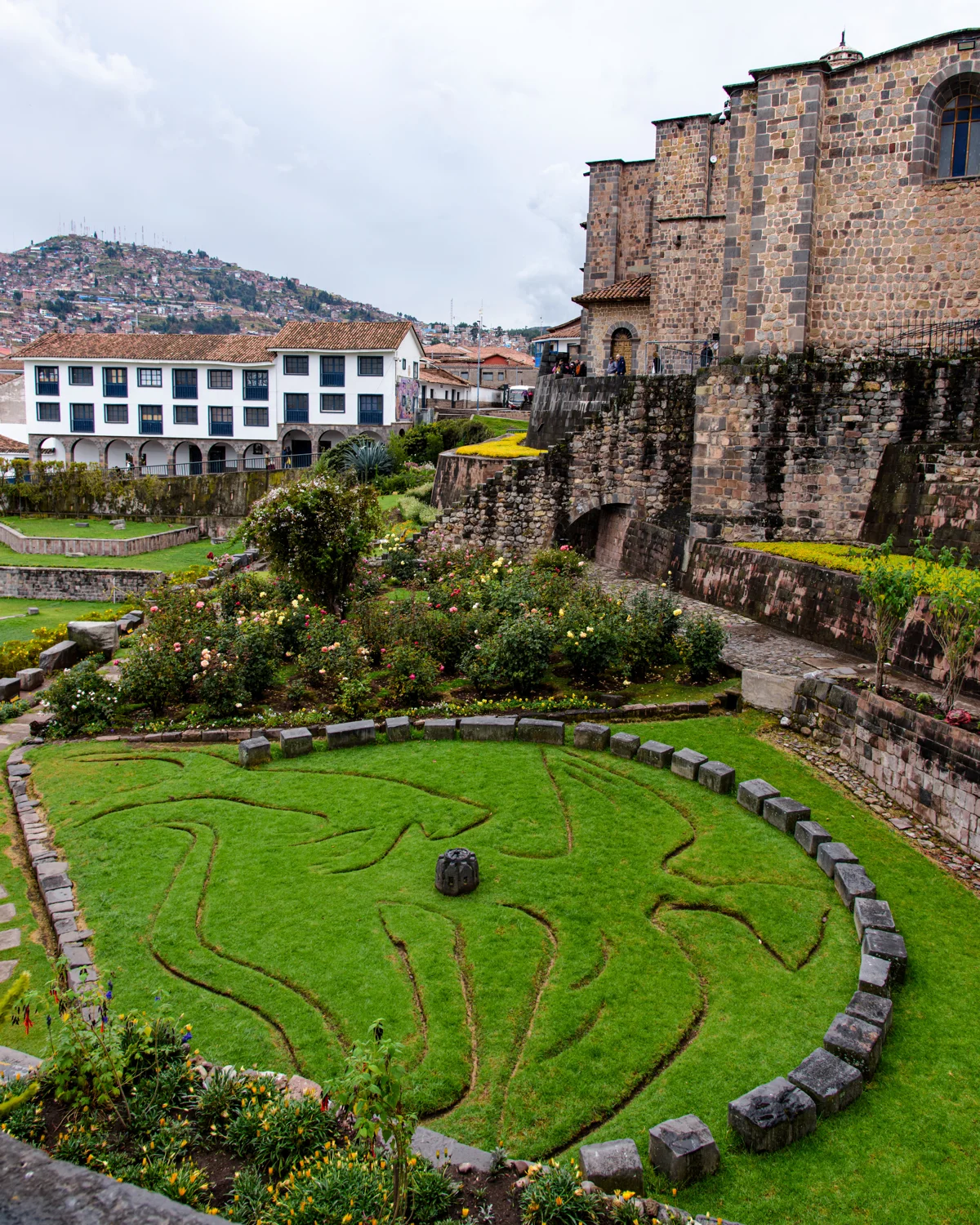
The municipality’s architectural record identifies the church and cloisters of Santo Domingo as colonial construction over the Qorikancha structures. These are different historical layers, not interchangeable labels for the same building phase. The cloister and tower in my photographs belong to the later complex; the finely fitted stone openings tell a different part of the story. [2]
Why it matters beyond a single building
UNESCO identifies Cusco as the political, religious and administrative heart of the Inca state and highlights Qorikancha among its exceptional stone-built monuments. The city’s later churches and houses were constructed within and over the earlier urban fabric. Qorikancha makes that process tangible: you can study an Inca architectural space while standing inside a place profoundly reshaped after the conquest. [3]
Two ways of framing space
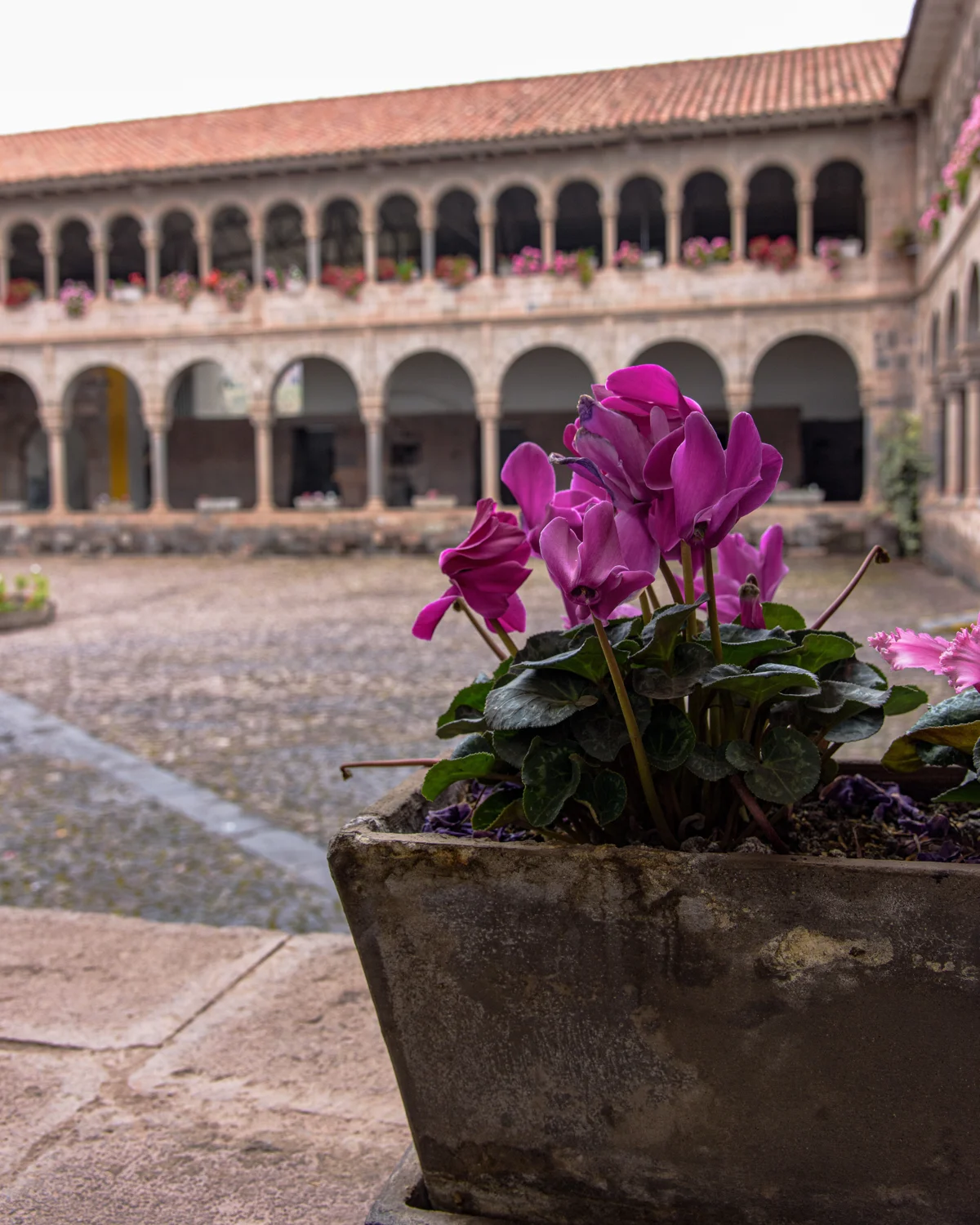
Look first through the aligned stone openings, where each smaller rectangle draws the eye farther inward. Then compare the cloister’s repeated arches and the tower above it. Both photographs use repetition, but the material, proportions and historical context differ. The flowers and planted garden belong to the present-day experience of the complex; they are not evidence for reconstructing its Inca planting scheme.
Look more closely
- Follow the aligned openings in the Inca masonry.
- Distinguish the colonial cloister and tower from the earlier stone enclosures.
- Compare intimate interior views with the exterior garden and masonry.
Qorikancha in photographs
Select a photograph to open its full frame.
Photograph by Brandon Wichmann
Photograph by Brandon Wichmann
Photograph by Brandon Wichmann
Photograph by Brandon Wichmann
Photograph by Brandon Wichmann
Sources & further reading
Research supports the historical context; observations of the photographs are my own. Interpretations are distinguished from visible features.