Cusco · Hills above the city
Q’enqo
A place shaped around living rock
Q’enqo offers a different encounter with Inca architecture: a standing monolith, a curved plaza and worked rock. Instead of looking only at walls assembled from separate blocks, look at the relationship between masonry and the outcrop itself.
Explore 3 photographs ↓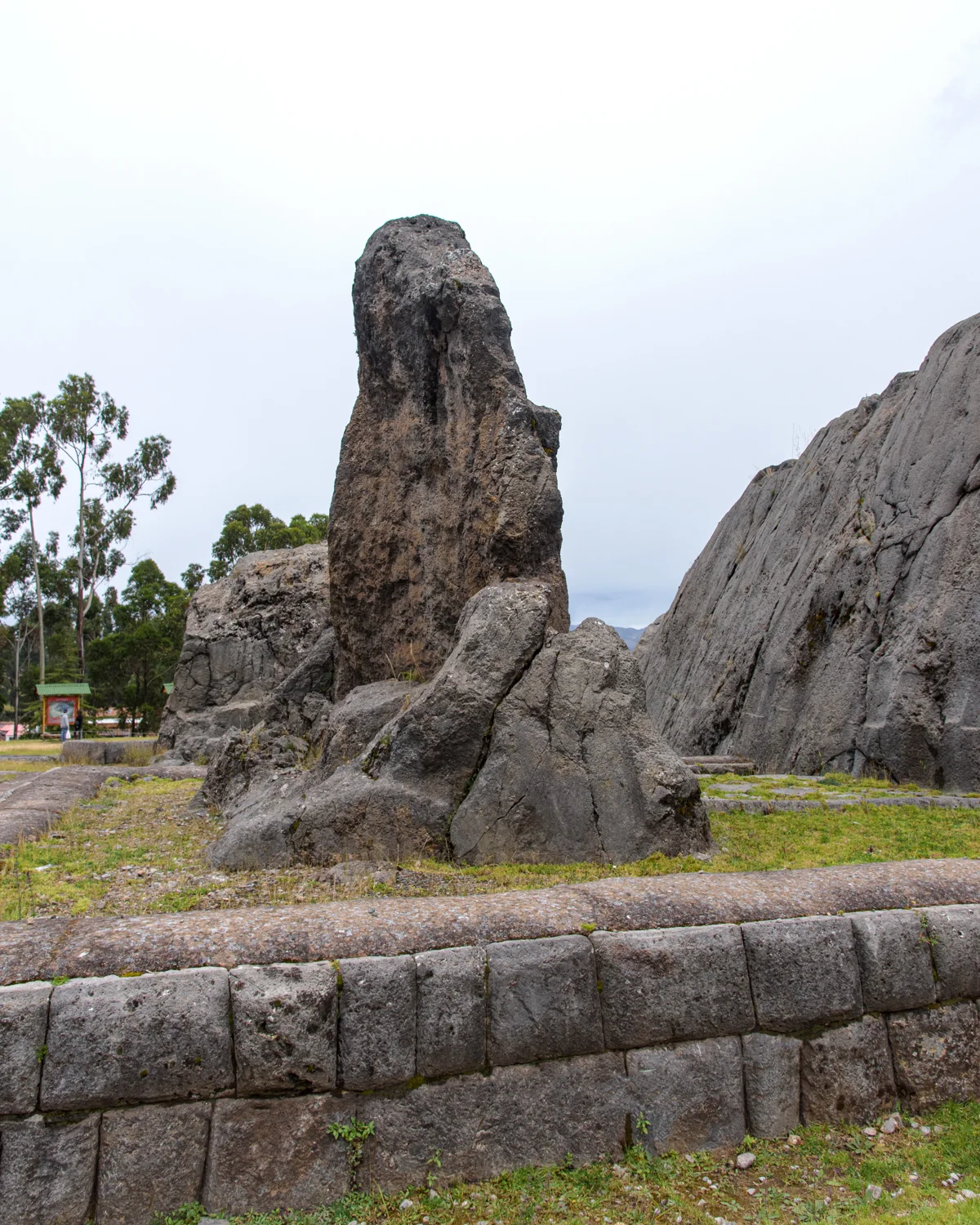
The monolith and the curved plaza
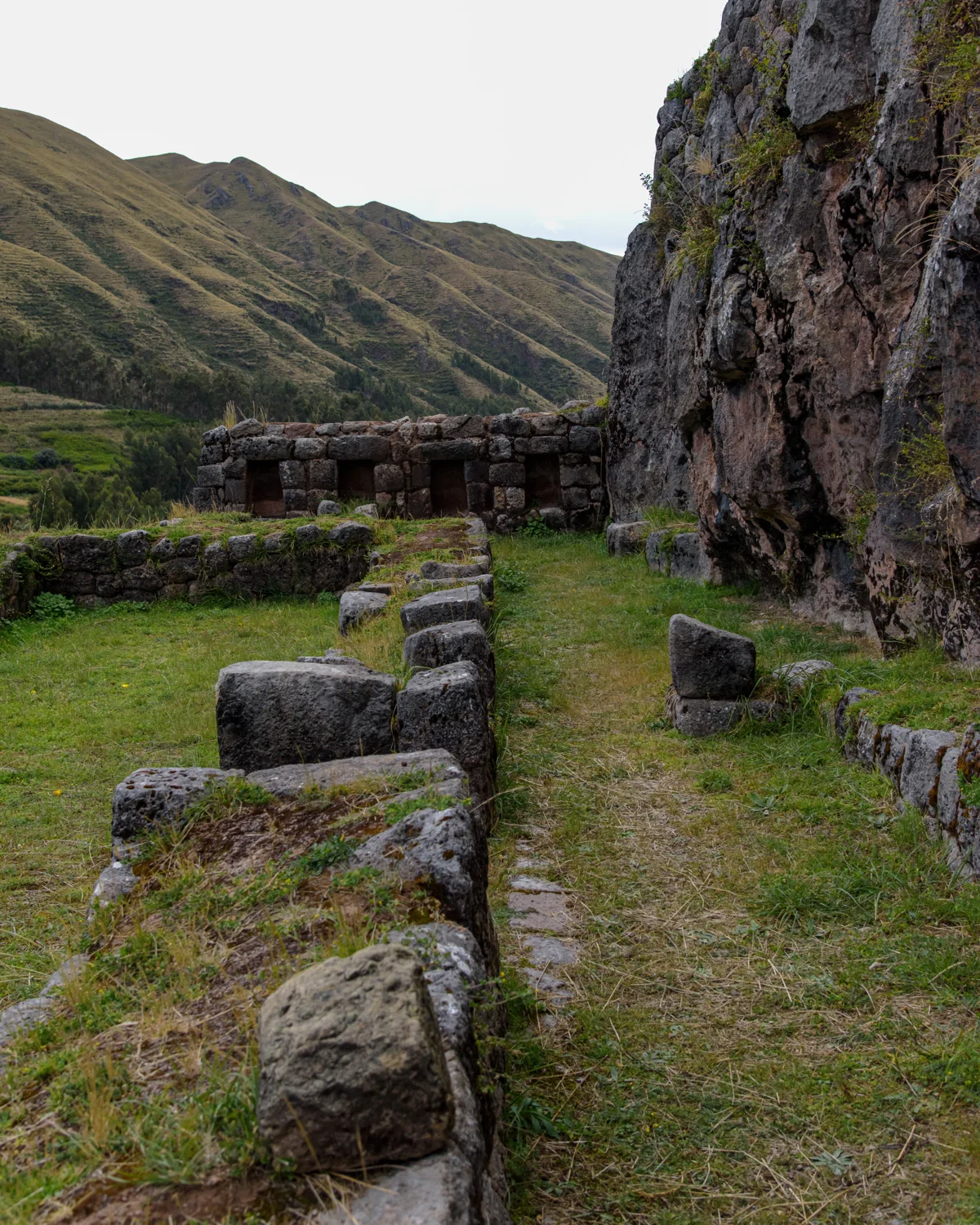
COSITUC describes a semicircular plaza with nineteen niches and a central stone monolith. It also records passages leading into underground galleries and carved features above. These are useful physical anchors for reading the place. The monolith and the enclosing masonry are particularly distinctive in the first photograph, while the second follows the line of niches beside the rock. [1]
A site within the sacred hills of Cusco
The cultural authority includes Q’enqo among the archaeological sites of the wider Saqsaywaman park. Its setting belongs to a landscape of monuments around Cusco, not to the classic trekking route to Machu Picchu. That distinction is why it appears here in the Cusco section of the Peru guide. [2]
What the photographs can tell us
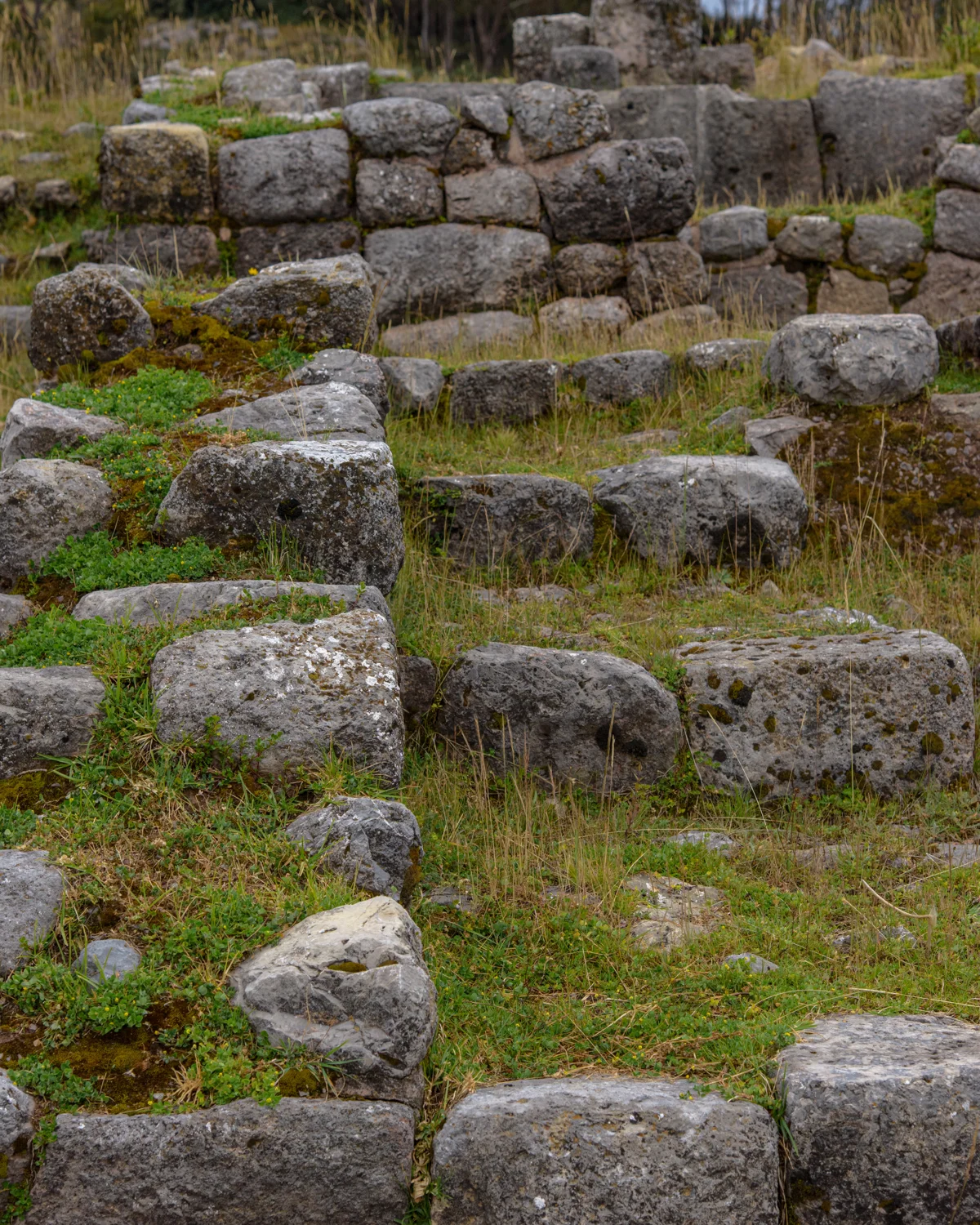
The strongest contrast is between the irregular surface of the rock and the repeated horizontal courses around it. Compare the outline of the standing stone with the quieter rhythm of niches and steps. The photographs establish recognizable architecture, but they do not establish a particular sacrifice, the identity of a carved animal or a precise astronomical alignment. Those more specific interpretations require evidence beyond the shape of a weathered stone.
Look slowly rather than name everything
With only three selected frames, this gallery is deliberately compact. Begin with the overall relationship of monolith and wall, move to the curved edge, and finish with the steps. Each changes the scale of attention. The interest lies in how rock, constructed space and movement meet, even where the exact use of an individual feature remains uncertain.
Look more closely
- Compare the monolith’s uneven outline with the regular masonry at its base.
- Follow the curve of the niches beside the rock.
- Treat individual carved or weathered forms as observations before assigning them a symbolic meaning.
Q’enqo in photographs
Select a photograph to open its full frame.
Photograph by Brandon Wichmann
Photograph by Brandon Wichmann
Photograph by Brandon Wichmann
Sources & further reading
Research supports the historical context; observations of the photographs are my own. Interpretations are distinguished from visible features.