Middle Teton: one boulder field at a time
Two days with Garrett: camping in Garnet Meadows, scrambling the Southwest Couloir, and earning a summit that took time to sink in.
On August 31–September 1, 2025, Garrett and I backpacked into Garnet Meadows and summited Middle Teton. This is the trip as I remember it: a beautiful night below the mountain, hours of scrambling, an exposed summit, and a descent that made the accomplishment take time to sink in.
Why Garrett and I chose Middle Teton
My buddy Garrett and I wanted a hard summit—something that would challenge us without planning a roped technical climb. Middle Teton gave us that challenge. What I remember most is how much sustained scrambling and route-finding stood between camp and the summit. Choosing a route we intended to scramble did not make the terrain easy or the exposure insignificant.
Day one: Lupine Meadows to Garnet Meadows
We started at Lupine Meadows Trailhead and hiked in to camp at Garnet Meadows. Our plan was straightforward: spend the first night below the mountain, summit the next day, return to camp, pack everything up, and hike out that same day. Dividing the trip this way gave us a night in the mountains, but it still left a long summit-and-exit day ahead of us.
A clear night beneath a daunting mountain
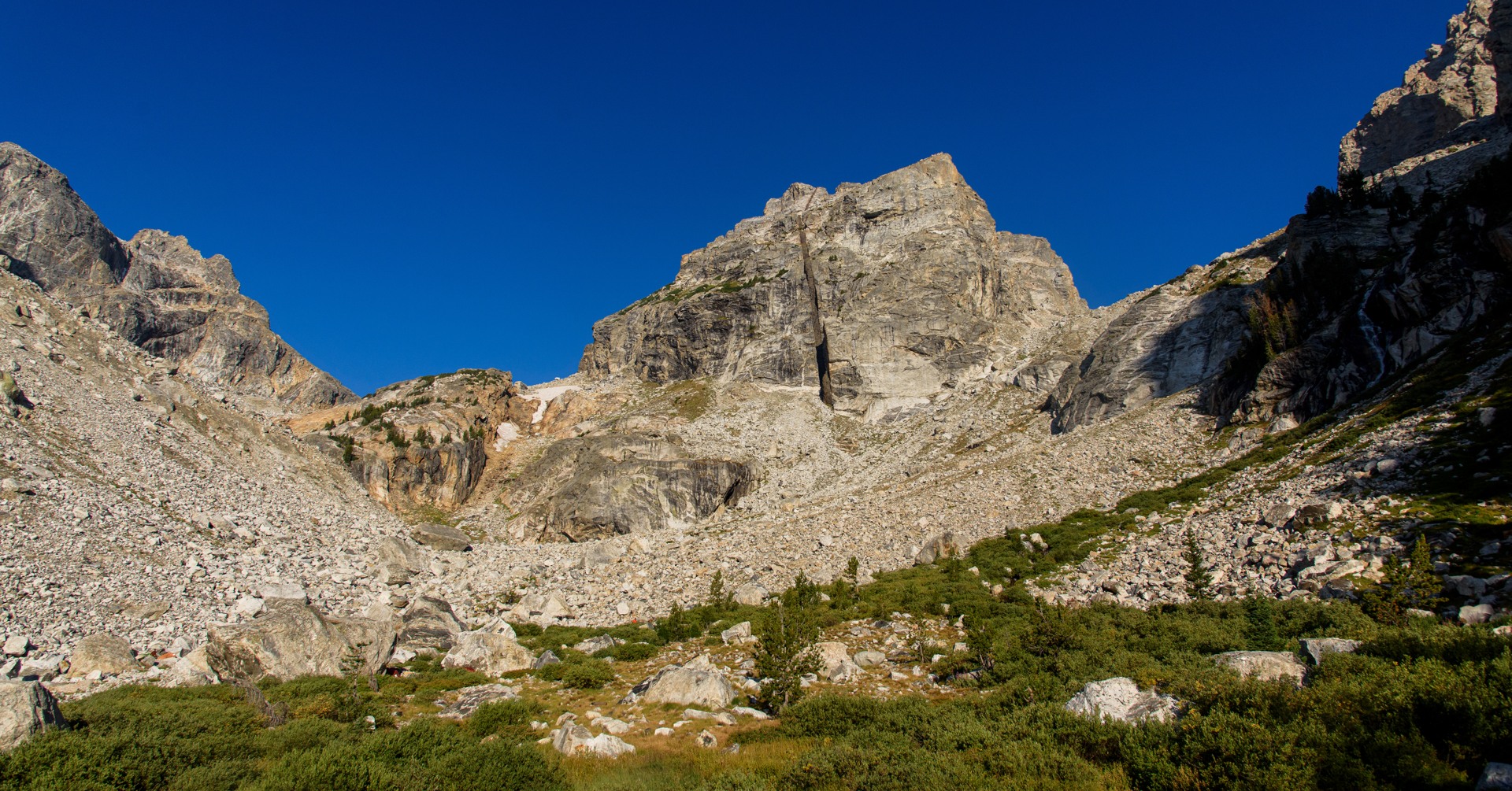
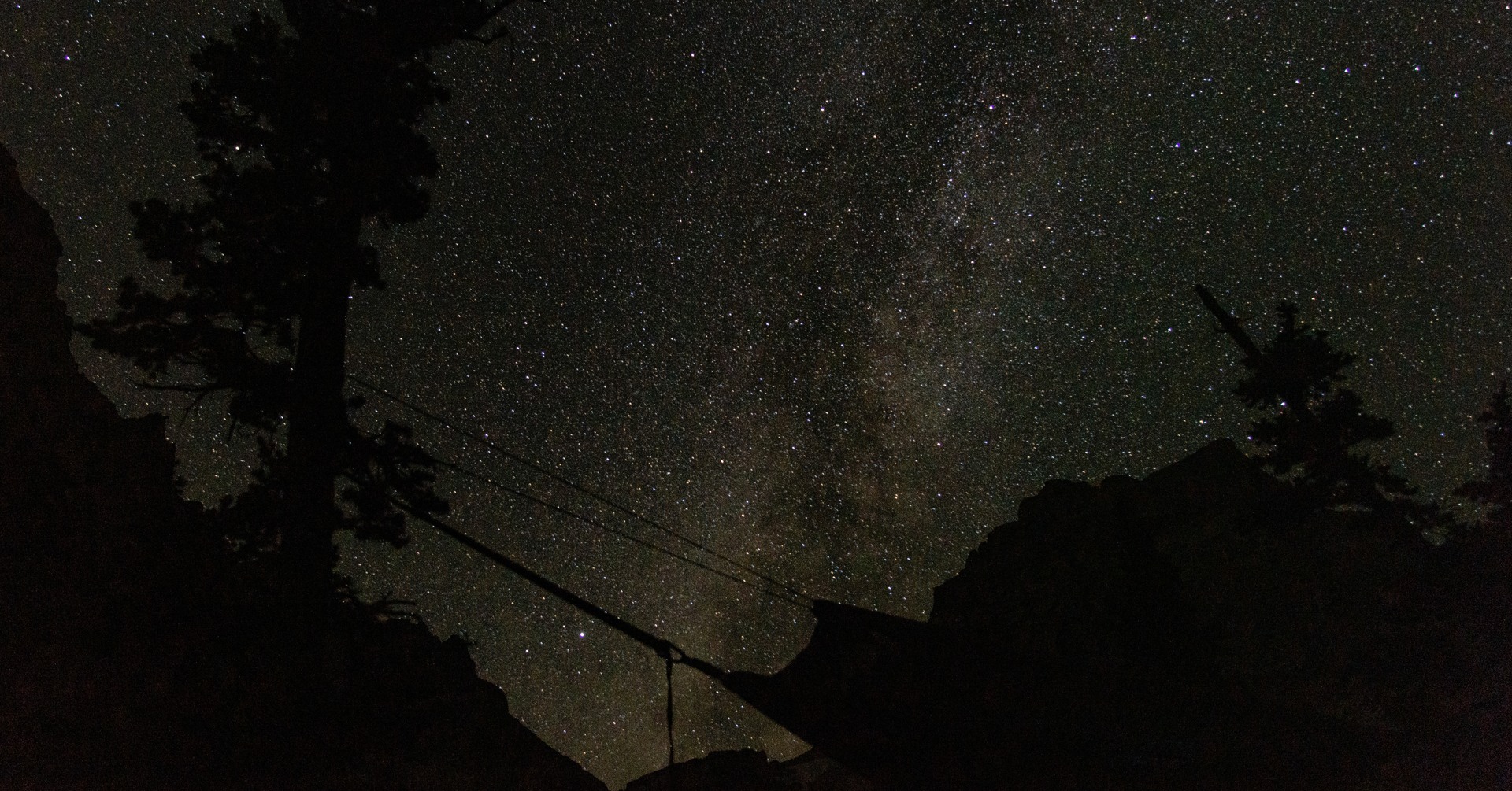
Garnet Meadows feels like a small meadow tucked directly beneath Middle Teton. We ate rehydrated backpacking food, and the night sky was clear and beautiful. It was one of those camps where the setting is as memorable as the destination. In the morning, the mountain looked incredible—and daunting. Sleeping below it made the scale of what we had come to do very real.
Day two: one boulder field at a time
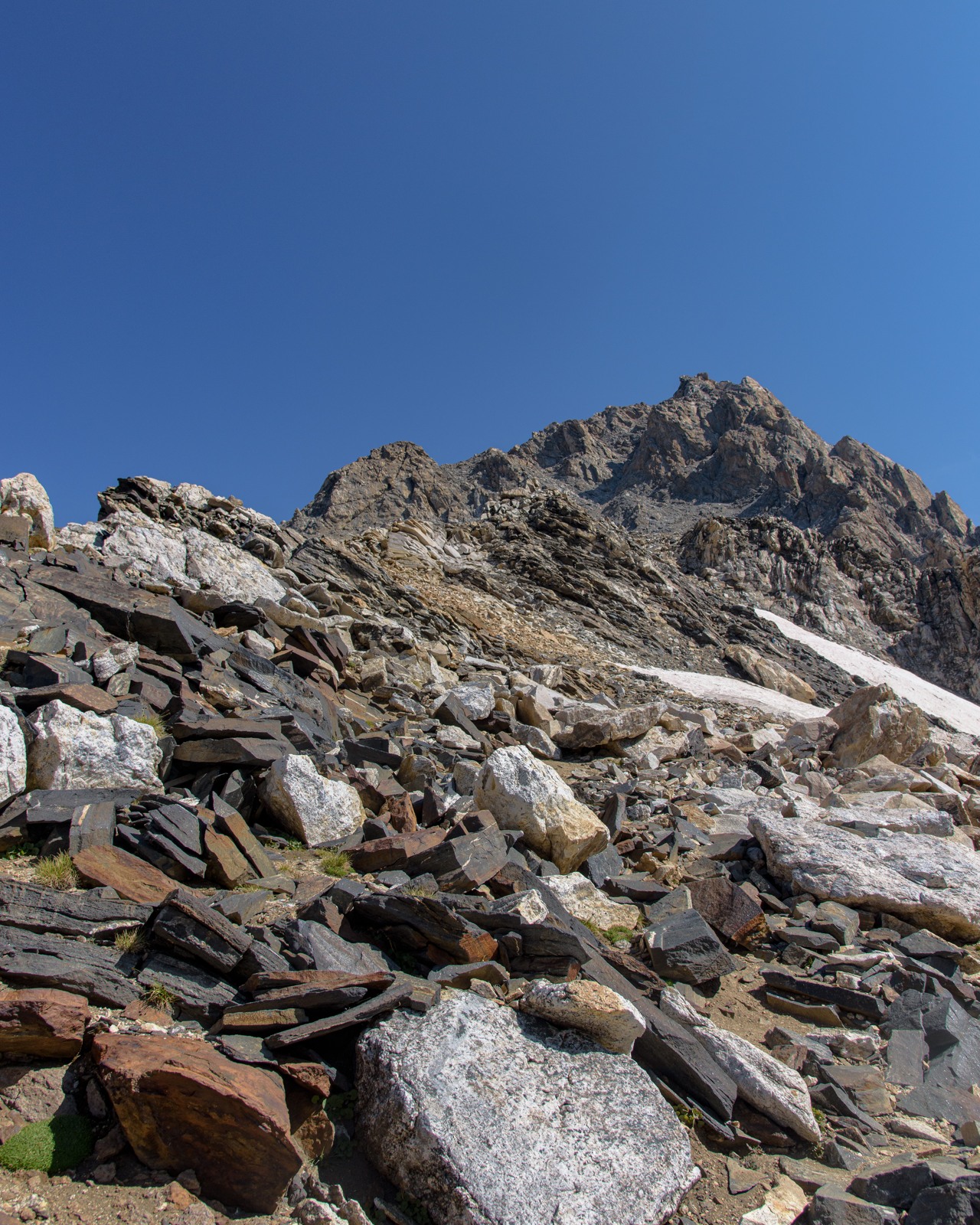
I remember leaving camp around 9 a.m. We worked our way toward the saddle and continued through the Southwest Couloir toward the summit. The boulder fields demanded hours of scrambling and route-finding. The elevation made the effort feel harder than normal, and the amount of terrain still ahead could be overwhelming. I handled it by thinking about one boulder field at a time instead of trying to take on the whole mountain at once.
The steep, loose couloir
The couloir was the hardest part for me. It was steep, loose, and dangerous, and it demanded attention rather than just endurance. The boulder fields had already made the approach a serious undertaking; this stretch added a different level of anxiety. A short route description can make the climb sound much simpler than it feels when you are tired, finding your way, and choosing each move through loose terrain.
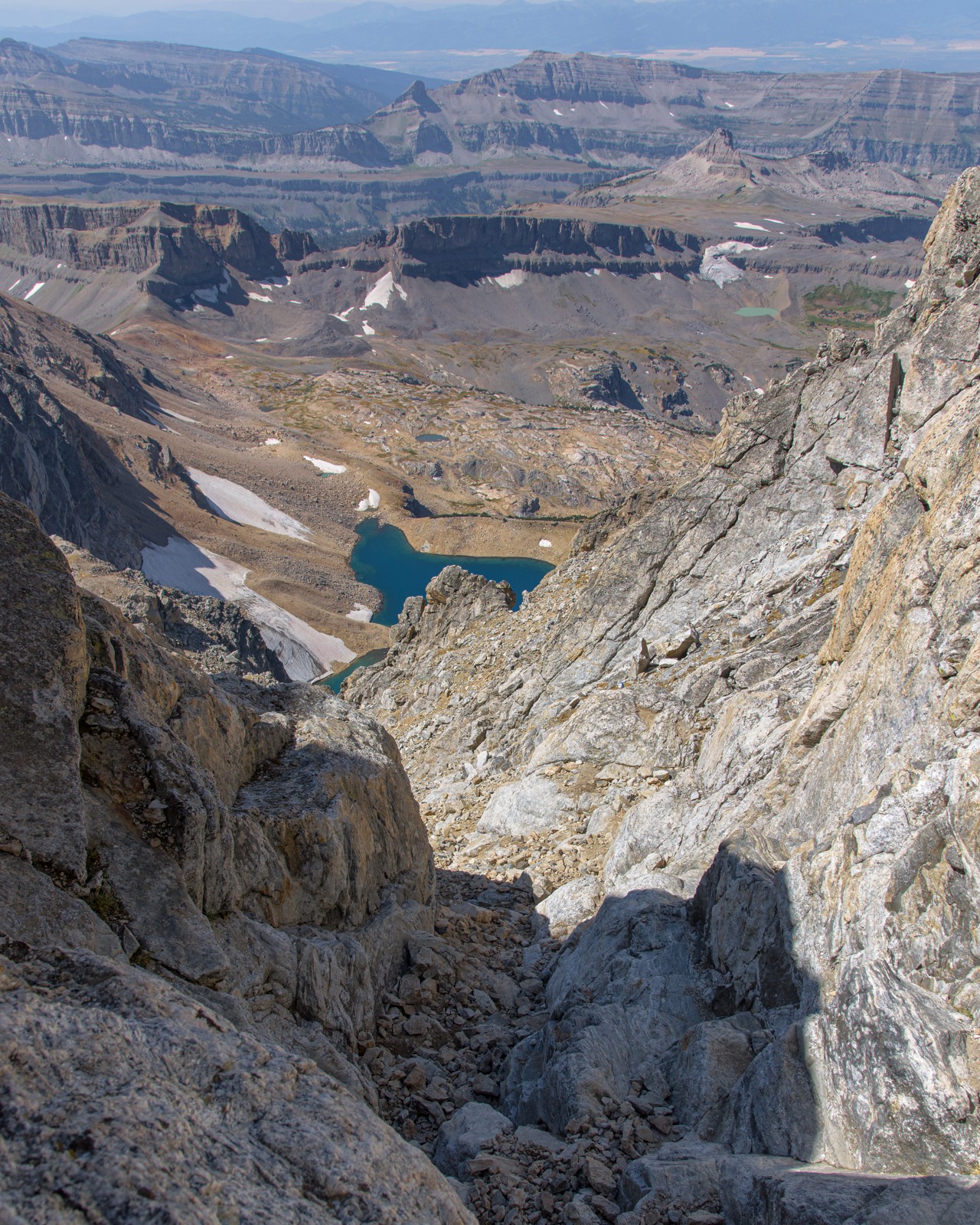
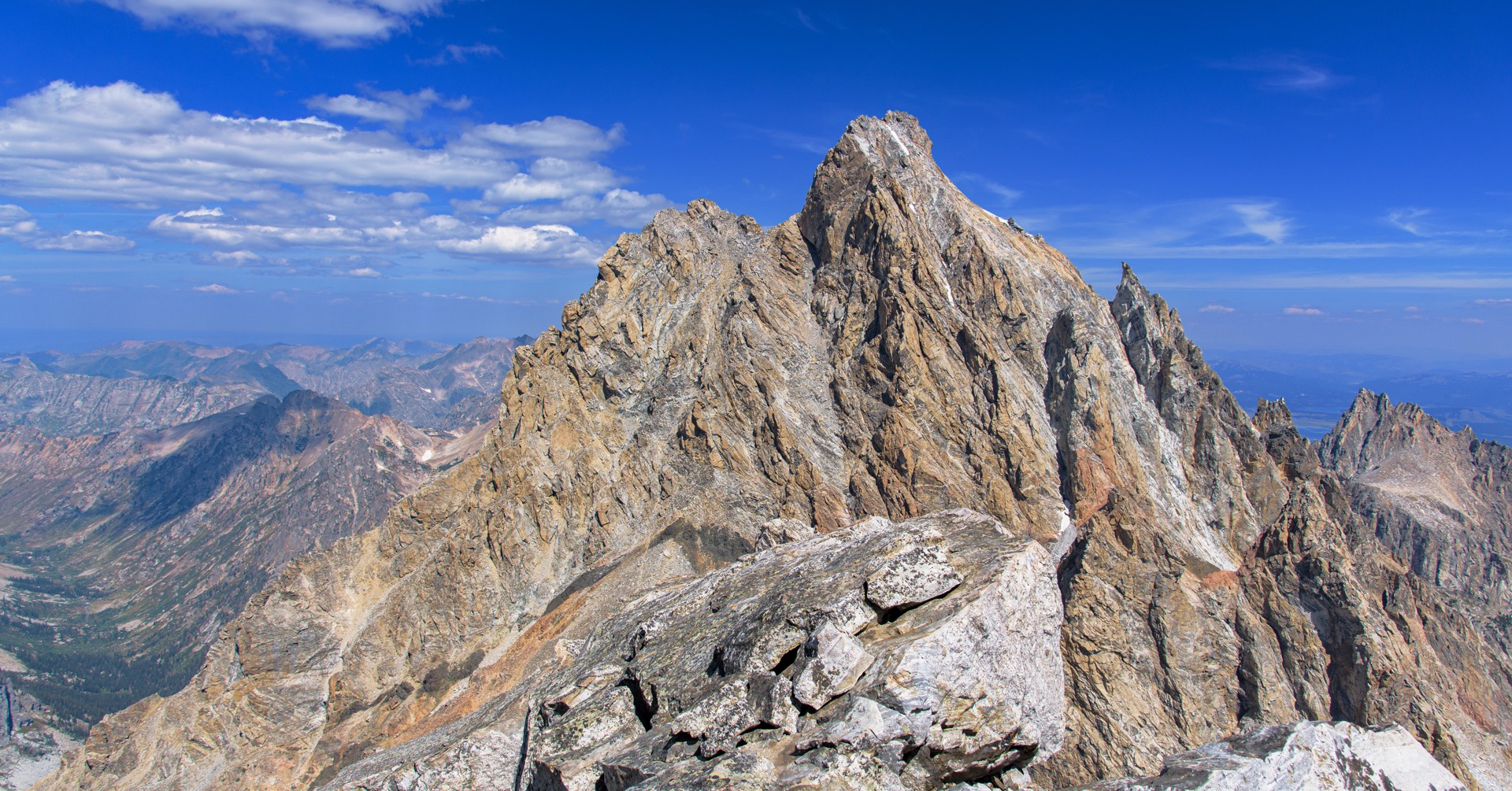
On the summit, facing Grand Teton
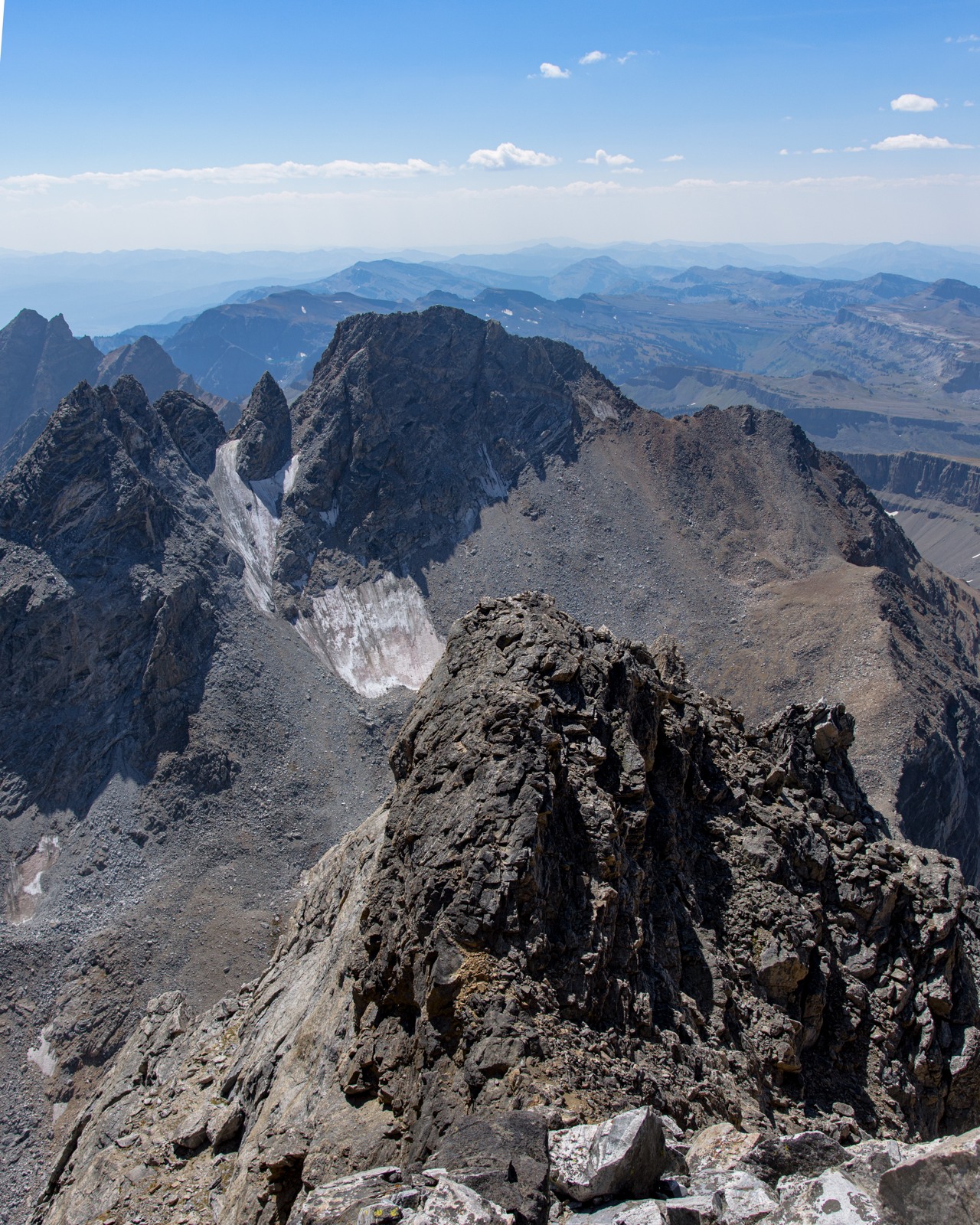
Reaching the summit felt like an enormous accomplishment. The views were phenomenal, and seeing the survey marker was a small detail I thought was especially cool. At the same time, I felt anxious because the summit was so exposed. Pride and unease were there together. The photograph looking from Middle Teton toward Grand Teton captures that moment best for me: the view I had worked for, and the scale of the mountains around us.
The summit was not the finish
The descent kept me anxious until we reached the saddle. After that, the feeling changed to exhaustion. I was sluggish, spent, and ready to get back to camp, pack up, and finish the day. Knowing we still had multiple hours of boulder fields ahead was daunting. The views were incredible, but they were harder to enjoy with my body so beat. I felt accomplished throughout the return, yet it was not until I got home that I could really take in what we had done.
What I carried
My overnight kit included a hammock, a 30-degree sleeping bag, a Jetboil and fuel, rehydrated backpacking meals, and trail snacks. I carried a water filter and a two-liter CamelBak, plus a smaller daypack for the summit. My camera was a Nikon D810. Hiking shoes were important to me on this terrain, and electrolytes are something I recommend thinking about for a demanding day. This is a record of what I brought, rather than a complete kit list: water capacity, sleeping insulation, footwear, and other equipment need to suit the conditions and the person carrying them.
The change I would make: bring a helmet
We did not bring helmets. Looking back at the loose rock and the seriousness of the couloir, that is the clearest equipment choice I would change. I would bring a climbing helmet on a future attempt. The experience also reinforced how important it is to arrive with more than fitness: comfort with scrambling, route-finding, navigation, and staying aware of the terrain all matter.
The experience I would want beforehand
I would want someone considering a similar trip to have consistent experience with long hikes and substantial elevation gain, plus backpacking experience for an overnight itinerary. The hours spent choosing a way through boulders are a major part of the challenge. Our plan did not involve roped climbing, but I would not describe that as a promise that the mountain requires no climbing judgment. Conditions and the route taken can change what skills and equipment are needed.
Season, conditions, and the overnight plan
Snowmelt is an important part of planning this trip. I would be particularly cautious about an early-season attempt, but I would not use the beginning of July as a guaranteed cutoff for snow-free terrain. The National Park Service notes that snow often remains in the mountains until mid-July. Check current climbing conditions for the actual trip dates. For an overnight trip like ours, arrange the required backcountry camping permit and confirm the camping plan with the park. The official planning resources below are where I would start.
What the short descriptions leave out
The biggest thing I would tell a friend is how much of a slog the scrambling and route-finding can be. It is not just the couloir or the final summit that makes this climb demanding. It is the time spent working through boulder fields on the way up, then facing them again when you are exhausted on the way down. That does not diminish the accomplishment. For me, it explains why Middle Teton remains such a proud one.
Our recorded hike
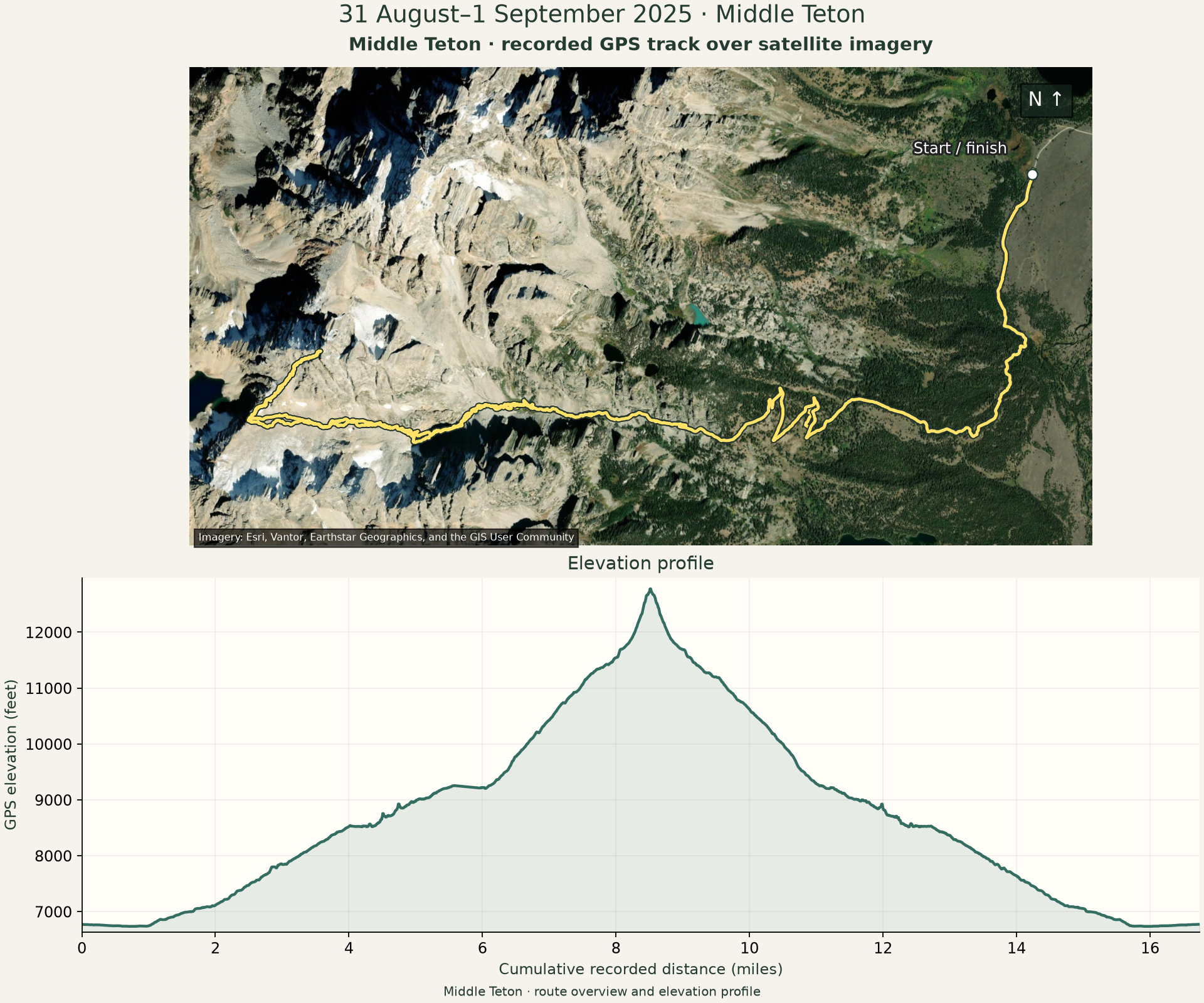
Recorded August 31–September 1, 2025. Distance: approximately 16.75 miles. Estimated elevation gain: approximately 7,110 feet. Total elapsed time: 33 hours 52 minutes, including overnight time and stops.