Creating depth: foreground, layers, and a sense of scale
Turn a wide view into a photograph with depth by arranging nearby detail, overlapping shapes, and distant atmosphere.
A photograph compresses a three-dimensional scene onto a flat surface. Depth comes from clues: overlapping forms, differences in apparent size, texture that becomes finer with distance, and changes in contrast. A wide-angle lens alone does not create a strong sense of space. What you place close to the camera matters just as much as the distant view.
Give the viewer somewhere to begin
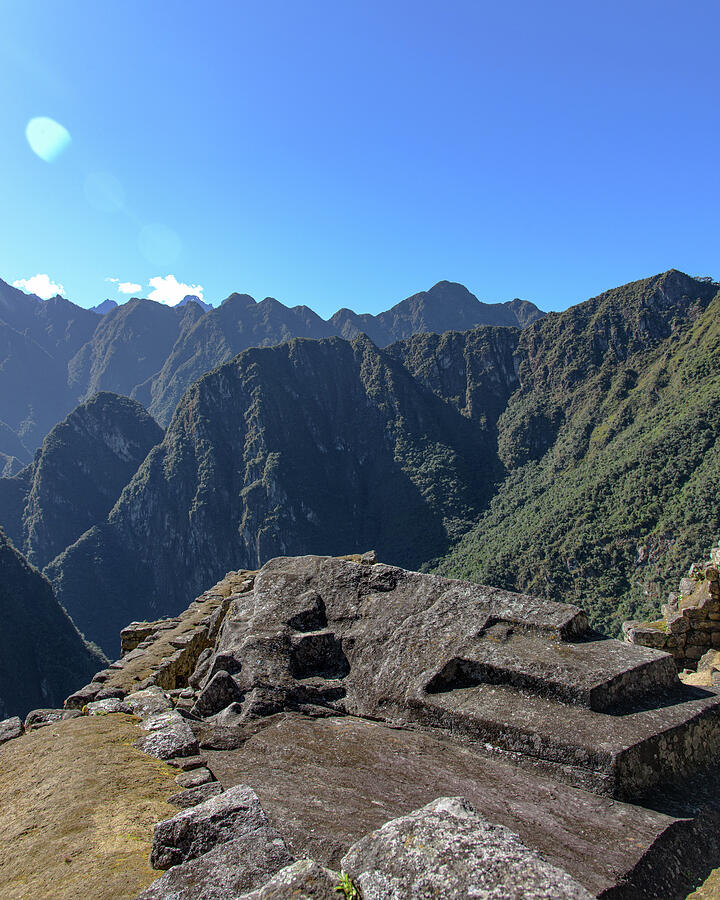
In Majestic Mountain Views at Machu Picchu, nearby stonework anchors the bottom of the photograph while the mountains rise beyond it. The rough, comparatively large foreground shapes give the eye a starting point. The landscape behind them then feels farther away because there is something close to compare it with.
Look for foreground detail that belongs to the scene: a rock, a stretch of trail, vegetation or architecture. Move your camera rather than automatically zooming wider. A small change in height can either separate a foreground shape from the horizon or make it block the view. Include it because it contributes, not simply because a composition formula says every landscape needs a foreground.
Build layers without clutter
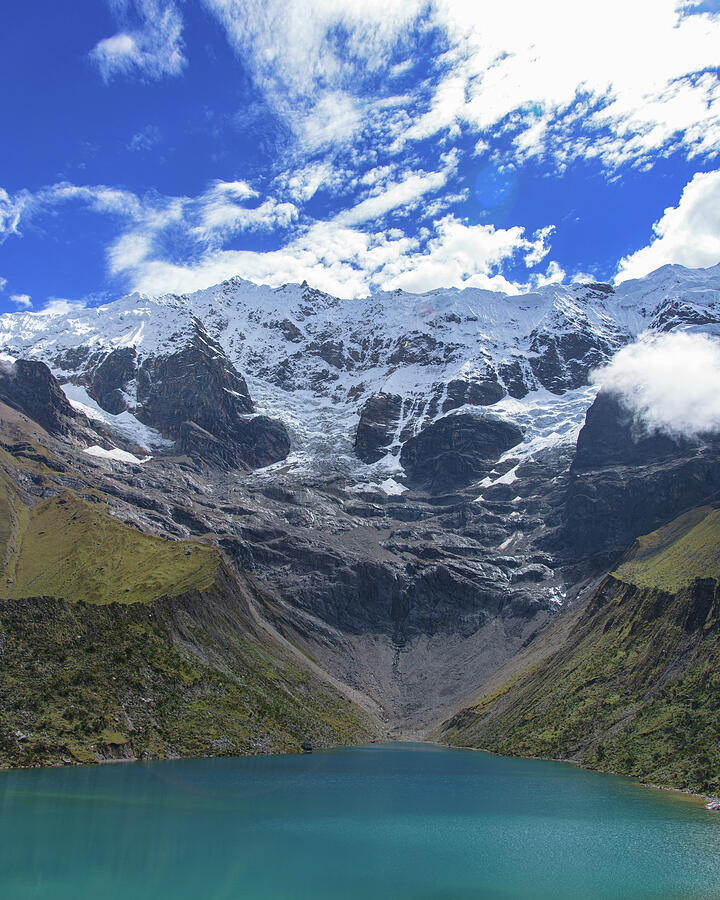
Majestic Mountain Overlooks Humantay Lake separates the turquoise water, the surrounding slopes, and the snowy mountain into readable areas. The change in color and texture helps the eye move through the scene. Each layer contributes a different kind of information instead of repeating the same visual weight.
Try reducing the composition to three broad shapes before considering fine detail. Can you distinguish what is near, what is in the middle, and what is far away? Overlap can establish depth, but poorly placed overlap can hide an important outline. Shift sideways until the important shapes remain readable. A tighter composition can sometimes show these relationships more clearly than the widest possible view.
Let atmosphere do some of the work
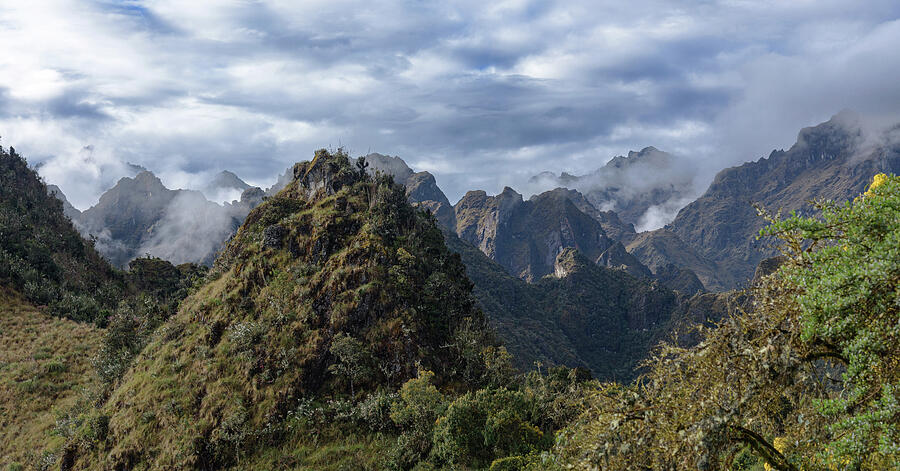
In Misty Andes Mountain Range Landscape, overlapping ridges and cloud create a sequence of distances. Some surfaces are more distinct than others. Differences in contrast and visibility help separate the landscape, even when the image contains many similar mountain forms.
Do not automatically add heavy contrast or clarity to every distant layer. Doing so can flatten the atmosphere that makes the scene feel spacious. In editing, compare the image at a small size as well as full magnification. If the overall arrangement becomes harder to read, stronger local detail may not be helping.
Focus and a useful exercise
When both nearby detail and a distant subject matter, check sharpness at both distances. Aperture, focal length and focus distance work together; simply choosing the smallest aperture is not a universal solution. Very small apertures can also reduce fine detail through diffraction. Use a stable camera position when a longer exposure is needed, and inspect the photograph rather than assuming it is sharp everywhere.
Make three versions of a landscape: one dominated by the distant view, one with a deliberate foreground, and one that emphasizes overlapping layers. Compare the apparent depth and the clarity of the subject. Keep the version that best expresses the place, even if it breaks the three-layer pattern.